


Article: What Makes Gold Jewelry Feel Solid: Weight, Karat and Craft
What Makes Gold Jewelry Feel Solid: Weight, Karat and Craft
Good gold jewelry feels solid because of three things you can measure: karat, the share of pure gold in the metal; construction, meaning solid gold versus hollow tubing; and gram weight, the actual amount of gold in the piece. When all three are right, a bangle has that dense, quiet heft that no photo can show you.
We wrote about why bold gold pieces outlast trends in our Bold Gold guide. This is the technical companion: what karat actually means, why one bangle weighs twice as much as another that looks the same, and what your hand is telling you when a piece feels substantial.

What does karat actually measure?
Karat is a fraction. Pure gold is 24 karat, so 18K gold is 18 parts gold out of 24, which is 75 percent pure gold. 14K is 14 parts out of 24, or 58.3 percent. The rest of the metal is an alloy, usually copper, silver, or palladium, and it is there on purpose.
Pure gold is too soft for jewelry. It scratches with a fingernail and bends under daily wear. The alloy gives the metal structure, and it also sets the color: more copper warms the gold toward rose, more silver and palladium cool it toward white. So karat is not a grade from bad to good. It is a recipe, and the recipe is a set of trade-offs.
14K vs 18K gold: which should you choose?
| 14K gold | 18K gold | |
|---|---|---|
| Pure gold content | 58.3% | 75% |
| Color | Lighter, cooler yellow | Deeper, warmer yellow |
| Scratch resistance | Higher | Slightly lower |
| Weight, same design | Lighter | Heavier |
| Best for | Pieces that take daily contact | Color depth and heirloom pieces |
Neither wins outright. 14K is harder, so it shrugs off the scratches of a piece that lives on your wrist next to a laptop. 18K carries more gold, so it is warmer in color, denser in the hand, and holds more intrinsic value gram for gram. At JJ we work in both, and the choice usually follows the piece: high-contact everyday pieces lean 14K, and pieces bought to be passed down lean 18K.
What is the difference between solid and hollow gold?
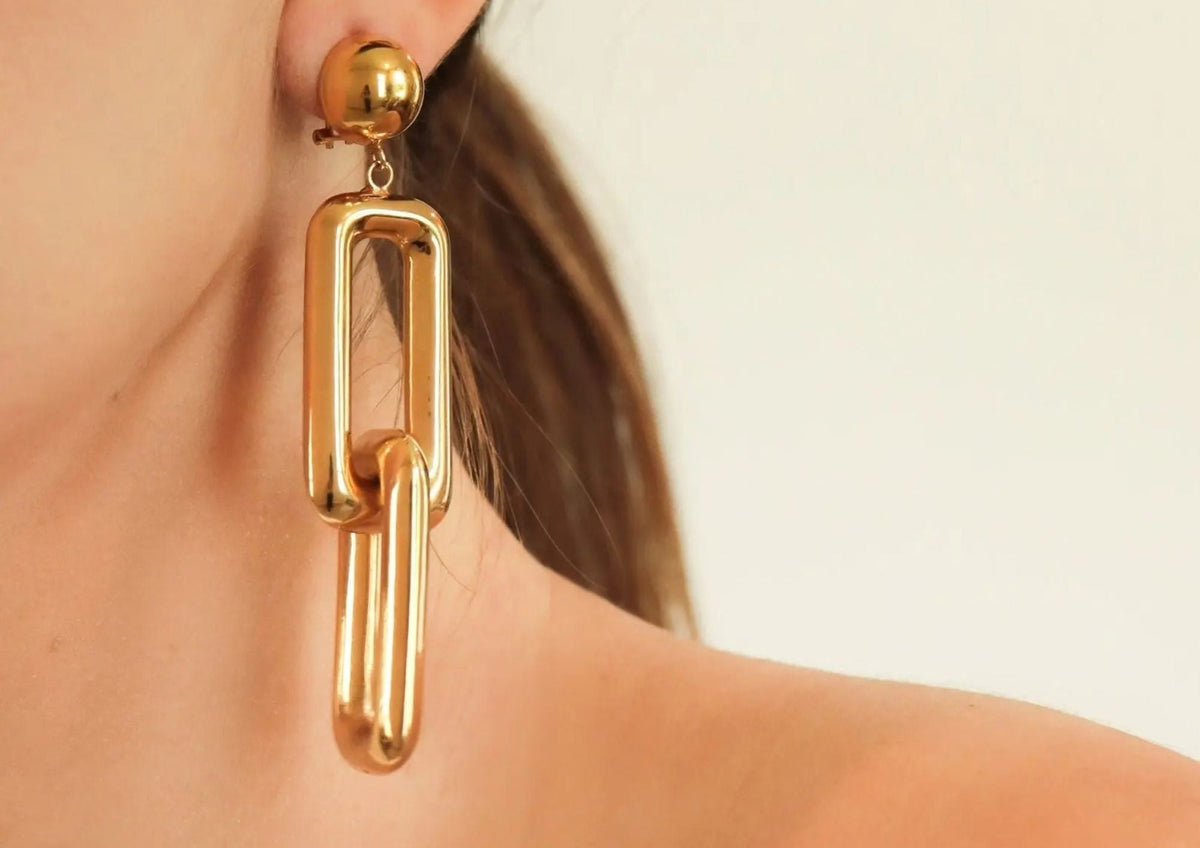
Solid gold is gold all the way through. Hollow gold is a thin gold tube around an empty center, and a lot of the big, light bangles on the market are built this way. Hollow is not a scam; it is how a large silhouette gets made at a small price. But it behaves differently. Hollow pieces dent if they hit a door frame, the dents usually cannot be repaired, and the piece feels like a shell because it is one.
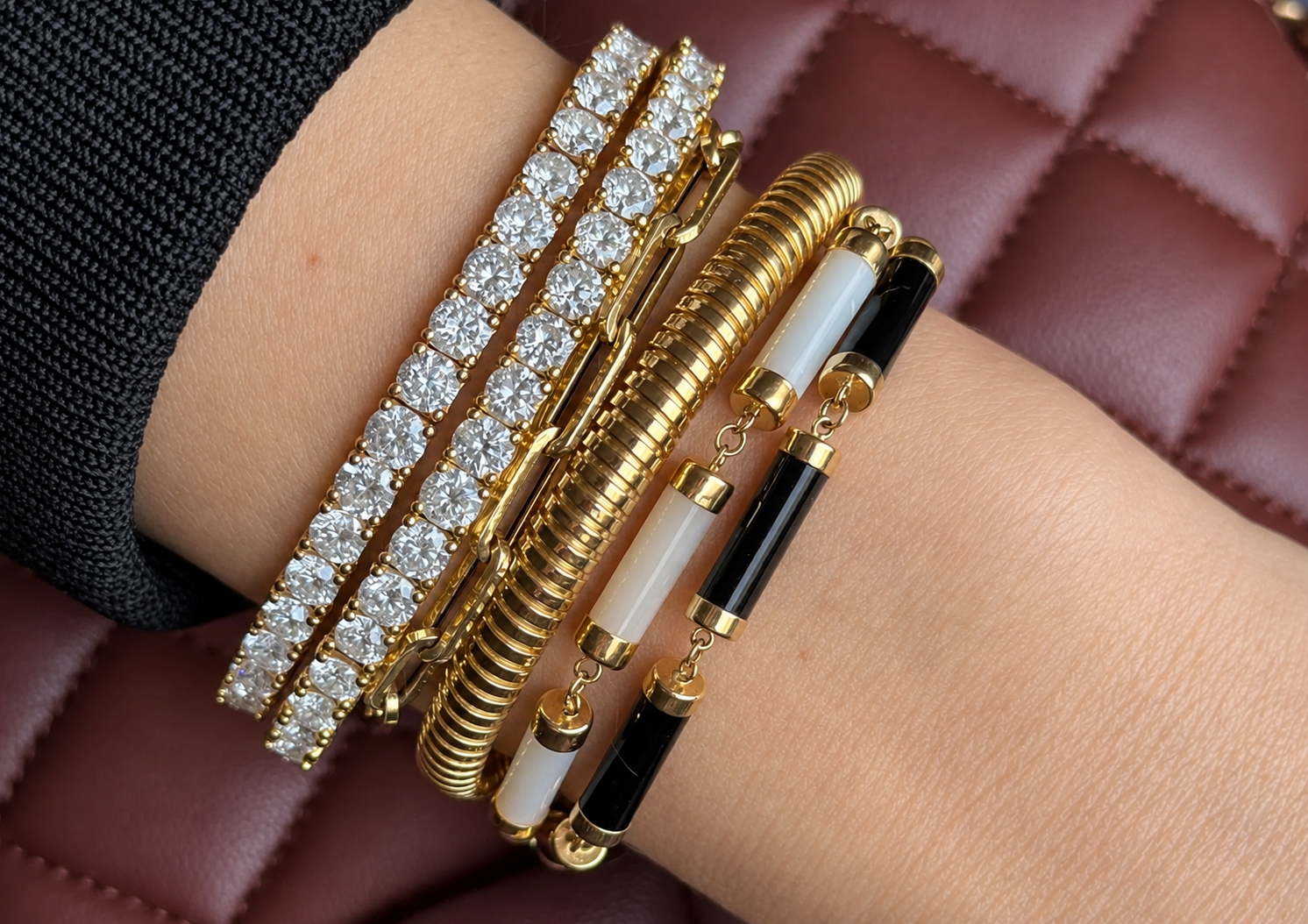
Solid gold takes the hit. It can be polished, repaired, and resized for decades, which is the real reason solid pieces cross generations: not sentiment, serviceability. Our bangle bracelets are solid gold, and if you are deciding between bangle silhouettes, our guide Bangle, Cuff or Flexible? breaks down the shapes.

Why does gram weight matter?
Gold is priced by weight. When you pay for a solid gold piece, most of what you are buying is the metal itself, gram by gram. Two bangles can photograph identically while one carries twice the gold of the other, and the price difference that looks arbitrary online is usually sitting right there in the grams.
This is why your hand is a better judge than your eye. Density is the first thing you notice when you pick up a solid piece, and it is the thing that keeps surprising you months in. It is also why we list gold weight in the Product Details of pieces where it matters: the number is the honest part of the price.

What does craft add that weight cannot?
Weight without craft is a gold bar. The details that make a heavy piece wearable are the ones you stop noticing because they work: a hinge that closes with a clean click and still does five years later, a clasp you can open with one hand, an inside surface polished as carefully as the outside so the piece sits comfortably against skin, settings that hold stones tight through daily wear.
These details are labor, and they are the second half of the price of a well-made piece. A heavy bangle with a weak hinge fails; a well-built one becomes the thing your daughter asks about. Karat, weight, and craft are the full answer to what your hand feels. You can feel all three in one place in the Bold Gold collection.

Solid Gold FAQ
Is 18K gold better than 14K?
Neither is better outright. 18K has more pure gold, deeper color, and more weight; 14K is harder and more scratch resistant. Choose 14K for high-contact everyday pieces and 18K for color depth and heirloom value.
Why is solid gold jewelry so expensive?
Because you are buying the metal itself. Gold is priced by weight, so a solid piece carries its value in grams, plus the labor of hinges, clasps, settings, and finishing.
How can I tell if a piece is hollow?
Weight relative to size. A large bangle that feels nearly weightless is almost certainly hollow tubing. A trustworthy listing states the gold weight in grams; if it is missing, ask.
Does solid gold tarnish?
No. Solid 14K and 18K gold does not tarnish the way plated jewelry does. It can pick up surface scratches with wear, and a simple polish brings it back.
Can solid gold jewelry be repaired or resized?
Yes, and that is much of the point. Solid gold can be polished, repaired, and resized for decades. Hollow pieces often cannot be repaired once dented.
The JJ standard. Every gemstone is GIA expert vetted by our gemologists. Every order ships with insured 2-day shipping, and exchanges are easy for 14 days, in our Miami boutique or by insured FedEx return. New here? Sign up for our newsletter and get 10% off your first order.
Still deciding? Chat with a specialist through the live chat on our site. Real answers from real gem people, no pressure.